




The Complete Public Speaking Guide
Public speaking terrifies one in five people today. It ranks among our biggest fears and often causes physical reactions like racing hearts and shaky hands.
Mastering public speaking is essential for moving ahead in your career since it’s used across all industries. Effective public speaking builds stronger teams, creates important connections, and opens doors to new opportunities. This complete public speaking guide works whether you need to lead a team presentation or just want to feel more confident speaking to groups.
These 10 practical tips cover everything from preparation to delivery. They work for corporate presentations, conference talks, team meetings, and any other speaking situation you might face.
Master Your Pre-Speech Preparation
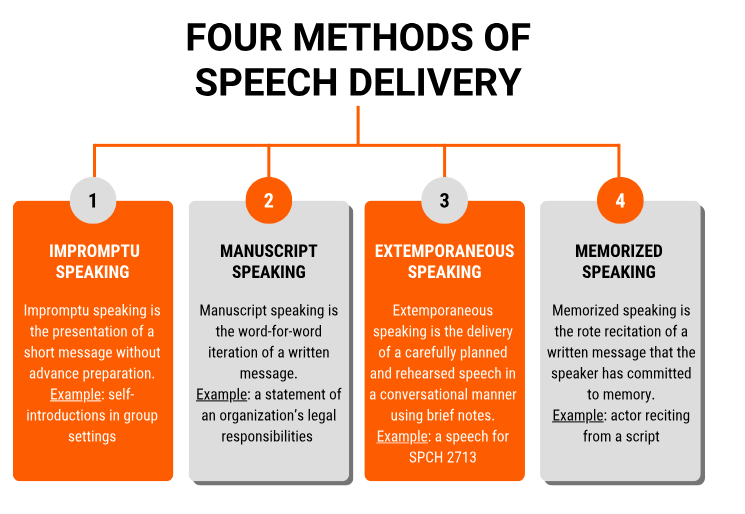
Preparation Makes Perfect Presentations
Great speaking starts long before you step on stage. Good preparation eliminates nervousness and turns anxious speakers into confident ones. Harvard research shows that the best presentations come from detailed preparation, not natural talent.
Research Your Audience Thoroughly
Your speech isn’t about you it’s about your audience. Before writing anything, take time to understand who will be listening. Find out their knowledge level, interests, and what they expect from your talk. This makes your message relevant to them.
Ask the event organizer specific questions about who’s attending. Check social media posts or news about the group to understand what matters to them right now. When you know your audience’s perspective, you can create content that connects directly with them.
Organize Your Content Strategically
After analyzing your audience, build a clear framework for your presentation. Define your topic, purpose, and main idea. Break your content into three main parts since people remember information best in groups of three.
Structure your speech with a logical flow that builds toward your main message. Create an outline that organizes your thoughts in order, but don’t write a word-for-word script that sounds mechanical. Your outline should mark key transitions between points so your audience can follow your thinking easily.
Create a Powerful Opening and Closing
The first 30 seconds of your speech are critical for grabbing attention. Don’t start with boring phrases like “Today I’m going to talk about…” Instead, use something unexpected—a surprising fact, a short story, or a thought-provoking question.
Your conclusion needs to leave a lasting impression. A strong closing reinforces your message and creates a sense of completion. End with an inspiring quote, a clear call to action, or by referring back to your opening. Memorize your final sentence so you can deliver it with direct eye contact and confidence.
Rehearse With Purpose
Effective rehearsal isn’t just running through your presentation over and over. Practice with specific goals for improvement each time. Record yourself to analyze your delivery or ask colleagues for honest feedback.
Mental rehearsal works surprisingly well. Before your speech, close your eyes and see yourself delivering a perfect presentation to an enthusiastic audience. This technique locks in your content and builds confidence. Also practice starting from random points in your presentation to prepare for unexpected interruptions.
Developing public speaking leadership presence depends mainly on your preparation strategy. The best speakers look effortless precisely because they’ve put in the work beforehand. Master these preparation basics to create the foundation for a compelling, confident delivery that captivates any audience.
Develop Confident Body Language

Body Language Speaks Before You Do
Your body communicates before you say a word. Body language makes up more than half of your communication impact, making it critical for effective public speaking. Your physical presence creates an immediate impression that either boosts or weakens your message.
Make Meaningful Eye Contact
Eye contact builds an instant connection with your audience, especially when you focus on individual listeners instead of scanning the crowd. This turns one-way presentations into conversations, with audiences responding through nods, smiles, and engagement.
For best results, connect with one person at a time for a complete thought—usually three to five seconds. This “leadership gaze” shows confidence while naturally slowing your speech to create a more authoritative tone.
When speaking to larger groups, divide the audience into sections and connect with one person from each area. Be aware of cultural differences some Asian cultures find extended eye contact disrespectful, while in Middle Eastern settings, prolonged eye contact between opposite genders might be inappropriate.
Use Deliberate Hand Gestures
Good speakers use purposeful gestures that clarify and emphasize their points. Studies show that proper hand movements increase your message value by about 60% and improve how well audiences understand you.
Keep your hands visible, working in the space between your shoulders and hips. When not gesturing, let your arms rest naturally at your sides rather than crossing them, clasping them, or hiding them in pockets positions that create barriers between you and your audience.
For maximum impact:
- Make gestures functional and match your message
- Use both hands slightly differently (avoid mirror movements)
- Involve your entire body to appear sincere
- Use open palm gestures at 45-degree angles to signal honesty
Gesturing helps you as much as your audience research shows that hand movements improve your fluency by freeing up mental resources for speaking.
Control Your Movement on Stage
How you move in the speaking space affects your perceived authority. Plant your feet shoulder-width apart when delivering key points, since shifting from side to side suggests uncertainty. Purposeful movement adds visual interest, while random pacing distracts.
A useful technique: pause your speech before moving, walk deliberately to a new position, plant your feet, and only then continue speaking. This creates natural transitions between topics while maintaining authority. Also, reduce the physical distance between yourself and the audience when possible to create stronger connections.
Adopt Power Postures
Power posing—standing in expansive, confident stances triggers real biochemical changes that boost your confidence. Research shows that just two minutes in a power pose reduces stress hormone cortisol by 25% while increasing testosterone by 8%, giving you a chemical advantage before facing an audience.
To use this technique, find a private space minutes before your presentation and adopt an expansive posture stand with feet shoulder-width apart, chest lifted, head high, and arms either up or propped on hips. This physical “power priming” signals to your body that you’re ready to command the room.
Even during your presentation, subtle power positions like standing tall with shoulders relaxed and head slightly forward project authority while making your audience feel at ease. Your confident body language creates a positive cycle—the more assured you appear, the more comfortable your audience becomes, further improving your delivery.
Craft a Compelling Delivery Style
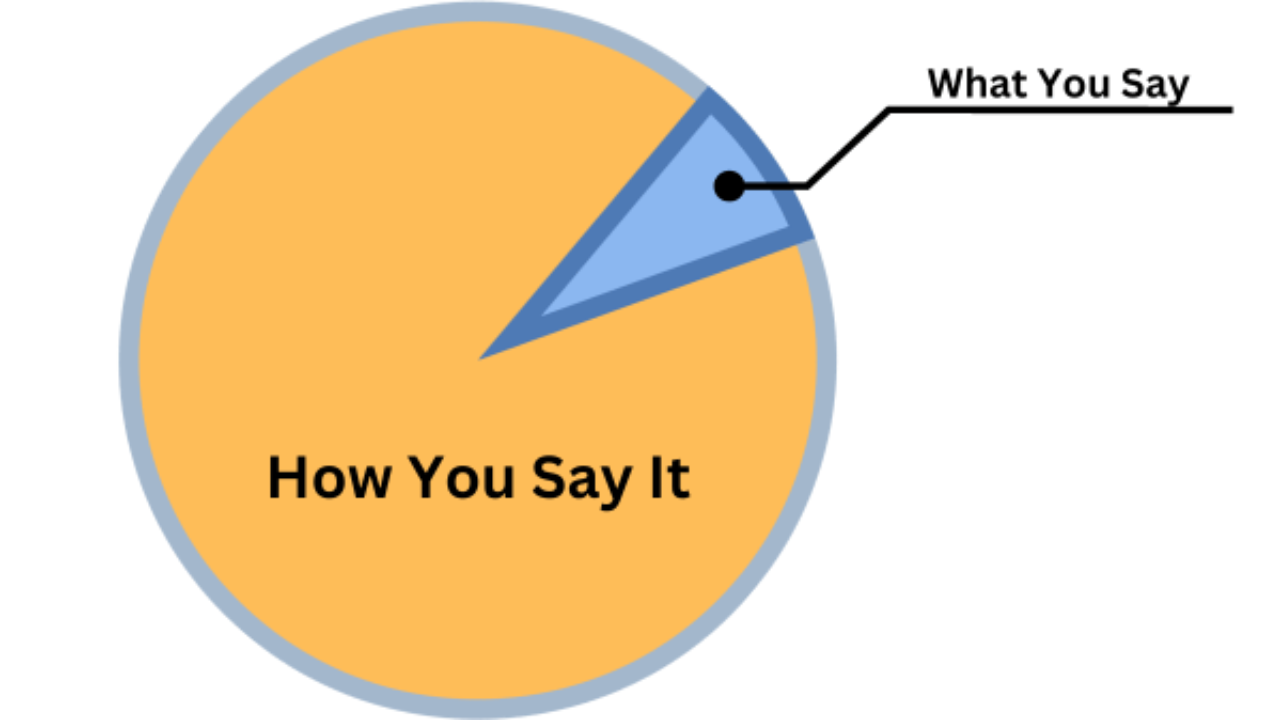
Voice Quality Makes or Breaks Your Message
The sound of your voice determines whether your message lands or falls flat. A good delivery style turns basic content into something memorable for your audience. Using vocal variety, strategic pauses, and well-placed humor lifts your presentation from merely informative to truly impactful.
Vary Your Vocal Tone and Pace
A flat, monotone voice bores audiences quickly no matter how interesting your content. Research shows that nearly 40 percent of your message’s impact comes from how you say it, not just what you say. Changing your pitch, pace, and tone creates a dynamic speaking experience that holds attention.
Speak slowly with lower volume and higher pitch to show warmth and empathy. For authority and confidence, keep a slower pace but increase volume while dropping to the lower range of your natural voice. Speed up with slightly increased volume to convey excitement and energy. These simple adjustments dramatically boost audience engagement with your message.
Tip: Practice reading the same content with different emotions to build your vocal range and flexibility.
Eliminate Filler Words
Words like “um,” “uh,” “well,” “so,” and “you know” weaken your message’s clarity and hurt your credibility. Though these verbal crutches feel natural in everyday conversation, they don’t belong in formal presentations.
The best way to eliminate filler words is replacing them with strategic pauses. When you feel the urge to use a filler word:
- Take a deliberate pause instead
- Give yourself time to think
- Start speaking again only when ready
This simple switch helps your mind stay ahead of your mouth, creating more organized speech patterns. Recording your practice sessions helps identify your specific filler word habits for targeted improvement.
Use Strategic Pauses for Impact
If silence is golden, pausing is a golden ticket for all communicators. Good pauses serve multiple powerful functions:
Pausing gives your audience time to process your message. Listeners need at least twice as long to digest your point as it takes for you to say it. Strategic silence also creates moments of drama and suspense, making your audience wonder what comes next.
Mark Twain understood this when he said, “The right word may be effective, but no word was ever as effective as a rightly timed pause”. For maximum impact, pause before delivering an important point to signal importance, and pause after to allow absorption.
As a rule of thumb, you’ll appear more confident with a pause every 5-12 words. This might feel uncomfortable at first, yet audiences rarely complain that a speaker “paused too much”.
Inject Appropriate Humor
Humor builds immediate connection with your audience and makes listeners more open to your message. Using humor requires careful consideration of your audience and context.
Self-deprecating humor works best rather than joking at your audience’s expense. Personal stories often connect well because they’re relatable and authentic. Humor should enhance your central message not distract from it.
Effective public speaking leadership means understanding that humor isn’t about turning your presentation into a comedy show. It’s about creating moments of connection through shared laughter at the right times.
Connect Authentically With Your Audience

Real Connection Beats Technical Skill
Authentic connection separates good presenters from truly memorable speakers. While preparation and delivery techniques matter, your genuine connection with the audience determines your ultimate impact as a communicator.
Tell Relevant Personal Stories
Stories turn abstract ideas into relatable experiences, helping audiences connect emotionally with your message. Data works, but personal stories create powerful bonds that statistics alone can’t match.
When creating your stories, develop a simple phrase that’s audience-focused and under 10 words. This gives listeners a key point they’ll remember. Cut out excessive setup—what experts call “pre-ramble”—and jump quickly into the conflict to hook your audience fast.
Vulnerability builds trust. Sharing moments of struggle makes you more relatable while showing transparency. As you refine your stories, make them more concise—the longer you work on a story, the shorter it should get.
Ask Engaging Questions
Questions turn passive listeners into active participants. They spark thinking and create mental investment in your presentation.
Effective questioning approaches include:
- Opening with a question to grab attention immediately
- Polling the audience about their experiences or opinions
- Asking reflective questions that create personal connection
- Building suspense through questions that plant curiosity
Questions provide real-time feedback about how well your audience understands your message. Since your goal is to be clearly understood, questions serve as checkpoints throughout your presentation.
Read and Respond to Audience Cues
Good speakers constantly watch audience responses and adjust their delivery. Albert Mehrabian’s research shows that 55% of communication comes from body posture, making these nonverbal signals important feedback.
Watch for key signals: people leaning forward suggest interest, while crossed arms may indicate resistance. Eye contact gives another important clue: wandering eyes show fading attention, possibly signaling the need for a story or interactive element.
Notice if audience members check watches or devices, as research shows the ideal presentation length without breaks is just 20 minutes. When energy drops, change your approach by acknowledging if a story isn’t working, cutting slides temporarily, or adding physical engagement.
By developing these public speaking leadership skills, you turn one-way presentations into dynamic conversations where audiences feel genuinely seen and valued.
Harness the Power of Visual Aids

Visual Aids Boost Your Message Impact
Visual information reaches our brains 60,000 times faster than text. Well-designed visuals aren’t just decoration they enhance audience understanding, memory, and emotional connection with your message.
Design Clean, Impactful Slides
When making slides, less is more. Keep each slide focused on one clear idea with minimal text no more than 5-6 bullet points per slide. Use large fonts for maximum readability: 30-48 points for titles and 24-28 points for main text. This ensures everyone can see your content clearly.
The assertion-evidence model works better than text-heavy slides. This approach puts a complete sentence as the headline followed by supporting visuals, increasing audience retention by up to 32%.
Colors matter for your message effectiveness. Use high contrast between text and background (dark text on light backgrounds or vice versa). Limit your color palette to just 2-3 colors total. Consistent design elements create visual cohesion that helps audiences process information better.
Use Props Effectively
Physical objects add a tactile dimension to your presentation, making abstract concepts concrete. Props should serve clear purposes illustrating ideas, providing examples, or emphasizing points not just distracting your audience.
For best results:
- Show props only when needed in your presentation
- Make sure objects are large enough for everyone to see
- Practice smooth transitions before and after using props
- Remove props once they’ve served their purpose
Even your clothing works as a prop, communicating with the audience before you say a word. Thoughtfully selected props show your attention to detail and commitment to audience understanding.
Balance Visual Elements With Your Speech
Your visuals and spoken content need careful coordination. Visual aids should support your words—not compete with them. Never read directly from slides, as this signals poor preparation and undermines your authority.
Timing is crucial; introduce visuals exactly when discussing related points, not before or after. Direct audience attention to key elements by physically pointing to important features of your visual aids, then bring focus back to yourself through verbal cues and movement.
Remember that your message—not your visuals—remains the star of your presentation. As presentation expert Garr Reynolds notes, visual aids should work like lampposts that illuminate your ideas rather than crutches to lean on.
Manage Public Speaking Anxiety
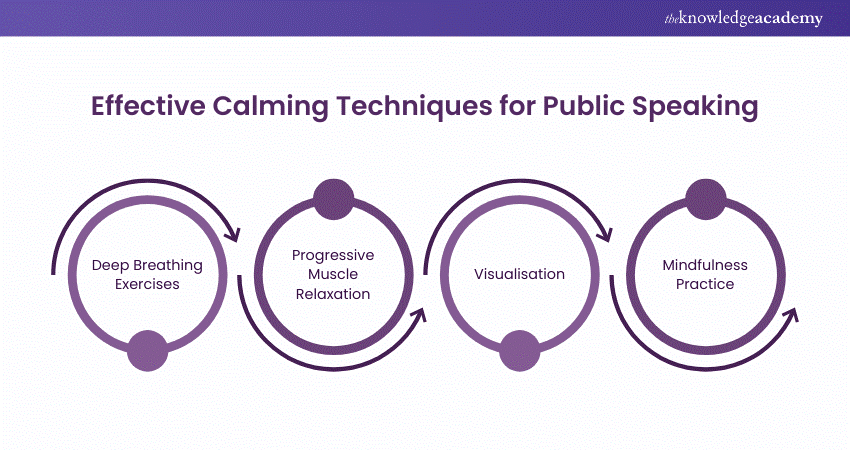
Turn Speaking Anxiety Into Your Advantage
Public speaking scares about 80% of people with social phobias, but handling anxiety separates average speakers from great ones. Even experienced professionals get nervous before presentations. What matters is how you respond to these natural feelings.
Transform Nervousness Into Energy
Nervousness isn’t your enemy, it’s fuel waiting to be redirected. The same physical responses causing anxiety (faster heartbeat, heightened alertness) can actually improve your performance when properly channeled. This “fight-or-flight” response sharpens your focus when you embrace it instead of fighting it.
Professional speakers know that some nervousness keeps you alert and pushes you to prepare thoroughly. First, acknowledge your nerves openly—trying to ignore them usually makes anxiety worse. Then, think of this feeling as excitement rather than fear, which studies show significantly improves how well you perform.
Practice Breathing Techniques
Your breath is your best tool for managing speaking anxiety. Proper breathing calms your nervous system and creates a better physical state:
- 4-7-8 Breathing: Breathe in through your nose for 4 counts, hold for 7 counts, then breathe out through pursed lips for 8 counts
- Diaphragmatic Breathing: Focus on expanding your belly instead of your chest, pulling air into the lower part of your lungs
- Box Breathing: Equal counts for breathing in, holding, breathing out, and holding again
Deep breathing before speaking lowers your heart rate and gives your brain enough oxygen to fight jitters.
Visualize Successful Outcomes
Visualization changes how you experience public speaking internally. Before your presentation, find a quiet spot, close your eyes, and clearly imagine yourself delivering your speech perfectly. See the audience responding positively—their smiles, nods, and engagement.
This technique has strong scientific backing from thousands of studies and is commonly used by athletes and performers. Repeat this visualization several times until you feel your confidence grow.
Prepare for Worst-Case Scenarios
Unlike common advice, visualizing only good outcomes isn’t enough. You need to identify realistic challenges—forgetting points, tough questions, or technical problems and develop specific strategies for each. This public speaking leadership approach puts you back in control, greatly reducing anxiety about what might go wrong.
Develop a Personal Speaking Style
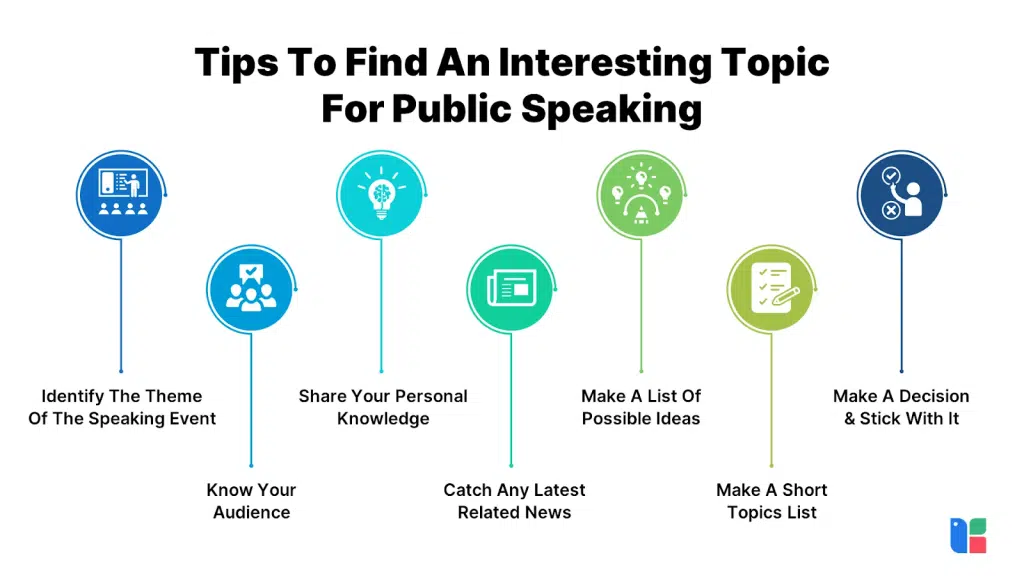
Your Unique Style Makes You Memorable
Developing your authentic speaking style builds on technical skills and makes you truly memorable as a presenter. Anyone can learn techniques, but your unique approach separates you from other speakers.
Identify Your Unique Strengths
Self-awareness forms the foundation of personal speaking style. Record your practice presentations or ask trusted colleagues for honest feedback. Study your natural communication patterns, your vocal tone, pace, and physical mannerisms that already work well. Feldshuh suggests “observing yourself ask a friend to take videos of you presenting” to spot both strengths and habits needing refinement.
Focus on your specialized knowledge and experiences nobody else has. Your unique perspective offers value audiences can’t get anywhere else.
Incorporate Your Personality
Authenticity creates immediate connection. Your speaking style should reflect your real self not an imitation of others. Personality makes speaking “far more interesting and visual”. Notice how you naturally talk with friends compared to your formal presentation style, then work to close this gap.
Even small elements of your personality create big impact:
- Use conversational language that feels natural to you
- Add your sense of humor where appropriate
- Embrace quirks that make you memorable (signature phrases, distinctive clothing)
Establish public speaking leadership presence
Taking up space physically and energetically shows confidence. This public speaking leadership approach means “becoming comfortable with taking up space” through deliberate posture, centering, and balanced stillness. Your executive presence should be authentic, with “freedom of expression and access to a range of vocal and physical communication skills”.
Developing magnetism “the ability to bring variety to how you present yourself so people want to hear more” requires connecting genuinely with each audience member.
Build Your Signature Approach
A signature framework provides structure while showcasing your unique method. This approach “ensures you stand out from your competition by positioning yourself as a thought leader” and creates a “rinse and repeat process” you can use consistently.
Structure your signature presentations in three parts: establishing the situation, presenting your solution, and highlighting achievable results. Personalize this structure with your compelling story why this topic matters to you personally to build deeper audience connection.
Your personal brand as a speaker should stay consistent across platforms while growing through continuous practice and refinement.
Master Different Speaking Environments

Different Spaces Need Different Approaches
Even experienced speakers struggle with unfamiliar speaking environments. Adapting to various settings is a crucial speaking skill that can make or break your presentation.
Adapt to Various Room Setups
Every physical space affects your presentation differently. Before your talk, check the room setup, note the seating arrangement, size, and acoustics. Position yourself at the front of larger venues rather than the middle to establish authority. Stand while presenting in boardroom settings to command attention even when others stay seated.
Room temperature affects how receptive your audience is, with studies showing temperatures between 71-76°F (22-24°C) work best for listener comfort. Arrive early to adjust seating if needed, moving chairs closer to the front cuts unnecessary distance and builds better connection.
Navigate Virtual Presentations
Virtual settings require different techniques than in-person speaking. Research shows audience attention drops significantly online. To fight this, boost your energy level and speak slightly faster to keep engagement high.
Audio quality matters more than video in virtual presentations—get a good microphone or headset, since poor sound will make viewers tune out. For the best internet connection, use an Ethernet cable directly to your modem whenever possible.
Engagement becomes even more important in virtual settings. Use polls, chats, or raised hand features every ten minutes to maintain audience involvement. Have someone else monitor chat messages so you can focus on your presentation.
Handle Technical Difficulties Gracefully
Technical problems happen in almost every speaking environment; your public speaking leadership shows in how you handle them. Stay calm when issues arise, acknowledging problems calmly shows professionalism.
For common problems:
- Microphone failures: Briefly pause, ask for help, and speak a bit louder if no backup is available
- Video problems: Continue without visuals if they aren’t essential; just describe what audiences should see
- Internet disruptions: Keep a backup device loaded with your presentation materials
Don’t panic when facing technical difficulties. Use appropriate humor to ease tension audiences prefer authenticity over perfection.
Handle Questions and Challenges

Q&A Session Makes or Breaks Your Presentation
Managing the Q&A part of your presentation separates average speakers from great communicators. Handling audience questions well shows your expertise and builds credibility on the spot.
Prepare for Common Questions
Anticipation works as your best defense when facing audience questions. Review your content critically to identify parts that might need clarification. Build a “question bank” with short, confident answers to each potential question. Practice these responses until they flow naturally without sounding rehearsed.
When you don’t know an answer, honesty works better than faking it. Simply acknowledge the limitation: “That’s an excellent question. I don’t have that specific information now, but I’ll research it and follow up with you personally.” This builds trust rather than destroying it.
Deal With Difficult Audience Members
Every speaker faces challenging participants sometimes. Stay calm and professional when dealing with:
- The Dominator: Acknowledge their input, then redirect by saying, “Thank you for sharing. Let’s hear from others who haven’t had a chance to speak.”
- The Arguer: Find something worthwhile in their comment before gently moving the conversation forward.
- The Side-Talker: Move physically closer to them or politely ask them to share their thoughts with everyone.
Disruptive behavior usually comes from unmet needs. Public speaking leadership means understanding these underlying reasons instead of getting defensive.
Turn Objections Into Opportunities
Objections show engagement, not rejection. When handled right, they become chances to strengthen your message. Listen carefully to understand the real concern behind the objection. Then restate it in neutral language before responding.
Stories work better than data when addressing objections. Share a quick example of someone who initially had similar concerns but ultimately benefited from your approach. This technique gets past logical resistance and connects emotionally.
Finally, check that you’ve fully addressed their concern: “Does that answer your question?” This simple follow-up shows you’re committed to real understanding.
Continuously Improve Your Skills
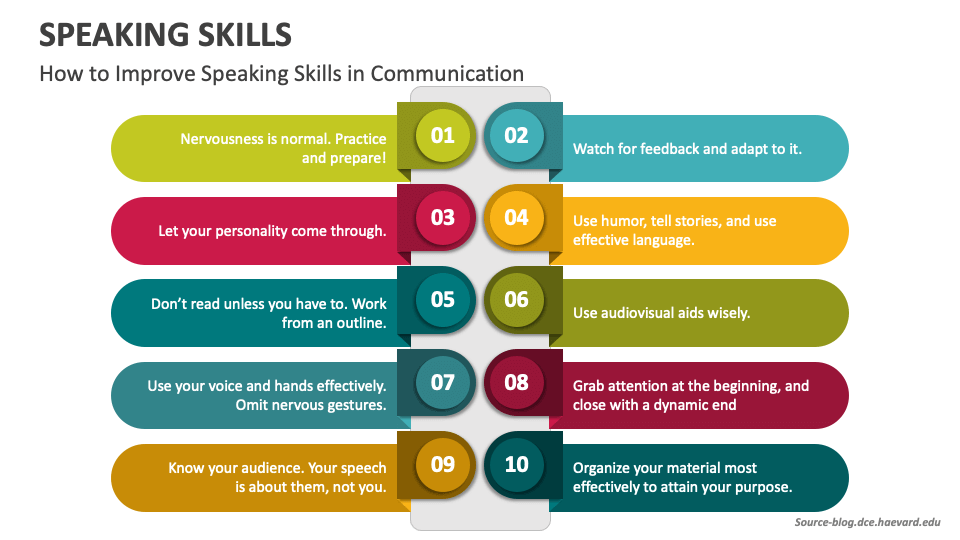
Speaking Skills Improve With Deliberate Practice
Great speakers aren’t born; they develop through consistent, purposeful practice. Malcolm Gladwell’s research shows that mastery takes roughly 10,000 hours of practice before making real breakthroughs. Several proven strategies can speed up your development.
Record and Analyze Your Performances
Self-evaluation starts with documentation. Record your presentations and review them the next day, noting specific areas for improvement. This outside view reveals patterns in your delivery you might miss otherwise. When watching recordings, pay close attention to your pacing, body language, and those filler words that weaken your impact.
Seek Constructive Feedback
All feedback isn’t equally valuable. Be picky about whose input you trust, mainly asking people you respect and those who know public speaking. Good feedback should be specific, detailed, and focused on particular aspects of your performance instead of vague comments like “be more confident”. Quality feedback points out both strengths and weaknesses, giving you a balanced view for growth.
Join Speaking Groups or Workshops
Groups like Toastmasters International provide safe places to practice public speaking leadership and get structured feedback. These communities give you regular chances to test material, improve your approach, and learn from others’ experiences. Being able to try content and revise it builds the confidence that greatly improves audience connection.
Set Progressive Speaking Goals
Vague goals like “become a better speaker” rarely work. Instead, create SMART goals for specific challenges:
- “I will eliminate filler words in all presentations within two months”
- “I will rehearse each speech six times before delivery”
- “I will improve audience engagement by incorporating humor”
Written goals reviewed daily significantly increase your chances of success. Remember that even the most accomplished speakers never stop learning and improving their craft.
Conclusion
Public Speaking Success Comes From Practice
Mastering public speaking requires working on several connected skills. Thorough preparation builds your foundation, while confident body language and good delivery make your presentations memorable. Connecting authentically with your audience and using strategic visuals turns basic speeches into powerful messages.
Managing anxiety plays a key role in speaking success. Instead of seeing nervousness as a problem, good speakers use this energy to enhance their performance. Professional public speaking leadership develops through regular practice, honest feedback, and adapting to different speaking environments.
Speaking skills improve over time with each presentation. Every time you speak, you get a chance to refine your techniques, boost audience engagement, and create lasting impact. Start using these tips today, focusing on one skill at a time. With consistent practice and authentic delivery, you’ll develop the commanding presence that sets top speakers apart.