



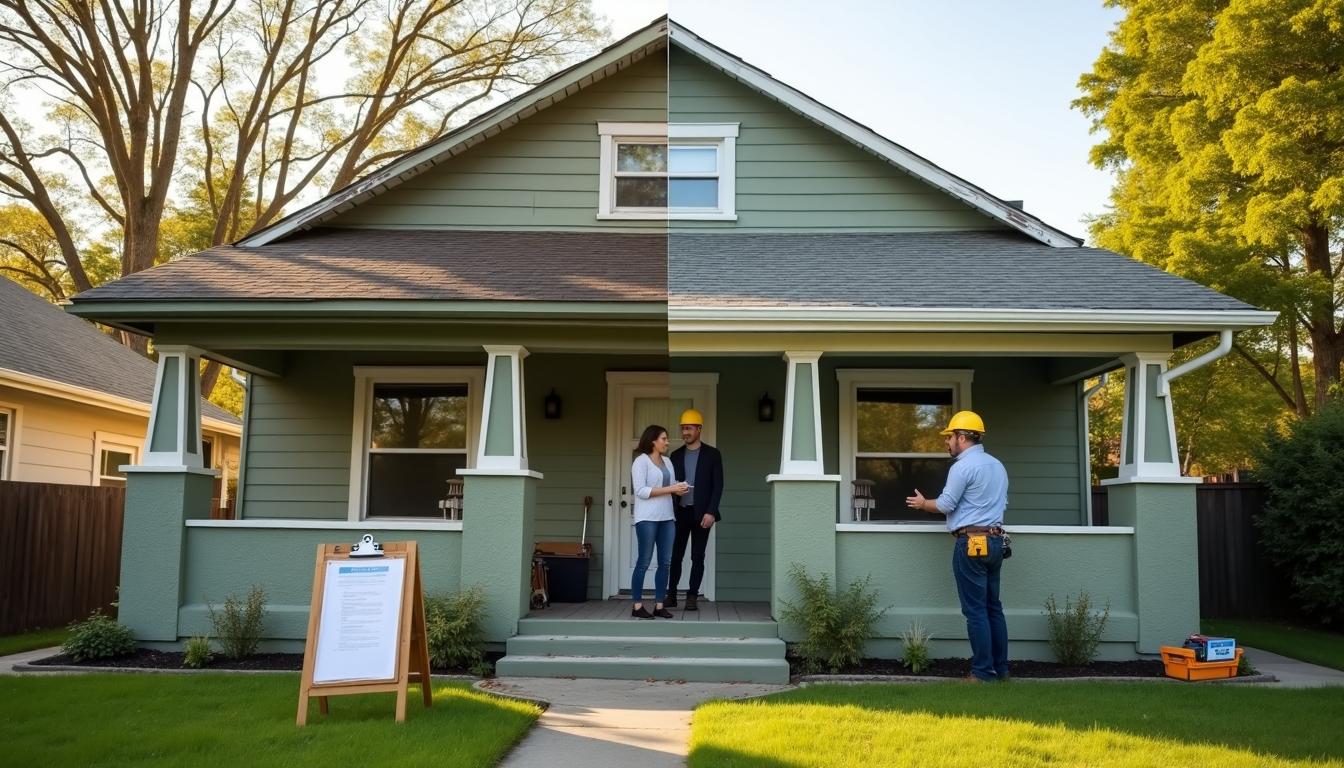
Fixer upper mortgage options help you buy a home for much less than move-in-ready properties. These specialized loans let you finance both the purchase price and renovation costs in a single mortgage.
FHA 203(k) loans need just 3.5% down payment, while conventional renovation loans start at only 3% down. These low down payment requirements make fixer-upper homes perfect for budget-conscious buyers looking to build equity.
The best part about these loans is how they simplify the financing process. You get one monthly payment instead of juggling multiple loans or emptying your savings account. This guide covers exactly how to get a fixer-upper mortgage and choose the right option for your renovation plans. It works for first-time homebuyers, investors, and pretty much anyone looking to turn a fixer-upper into their ideal home.
Understanding Fixer-Upper Opportunities and Challenges
Buying a fixer-upper property means knowing exactly what you’re getting into before signing mortgage papers. Here’s what makes these properties unique and how to handle their rewards and challenges.
What defines a fixer-upper property?
A fixer-upper is a property needing repairs, renovation, or redesign, though it usually remains livable. These homes attract buyers who want to increase property value for investment returns (flipping) or find an affordable starter home. Fixer-uppers come with a lower purchase price typically about 8% below market value because repair costs fall on you, the buyer. They need more than just cosmetic updates and might require structural improvements too.
Financial benefits of buying a fixer-upper
The main advantage of buying a fixer-upper is paying less upfront compared to turnkey homes. This means smaller down payments and lower monthly mortgage payments. When housing inventory is tight, especially for affordable starter homes, fixer-uppers let you buy into neighborhoods that might otherwise cost too much. With a fixer upper home loan, you can combine your mortgage with renovation costs, paying for repairs over time instead of all at once. Good renovations also boost property value; kitchen remodels recover 77.6% of costs, while a new roof might return 107% of what you spend.
Common renovation challenges to anticipate
Despite their benefits, fixer-uppers come with real challenges. Renovations almost always cost more than you expect, with surprise expenses averaging around $1,500. Hidden problems often show up during renovations, like outdated electrical systems, structural damage, or mold. The time commitment is big renovation projects typically take 4-8 months depending on complexity. Many buyers don’t realize the financial cost and stress of living in a construction zone, dealing with noise, dust, and disruption daily. Finally, permits and building codes can add unexpected complications and costs to your renovation project.
Assessing Your Financial Readiness for a Fixer-Upper Mortgage
The financial side of buying a fixer-upper needs planning beyond just getting a mortgage. Here’s a breakdown of the financial assessment process to make sure you’re ready for this investment.
Calculating your total budget (purchase + renovation)
Financial readiness starts with a clear budget calculation. Renovation costs typically run between $15 and $60 per square foot so a 1,000-square-foot renovation might cost from $15,000 to $60,000. Your total investment calculation should:
- Start with the property’s purchase price
- Add renovation costs from contractor quotes
- Include closing costs (about 3% of purchase price)
- Add architectural fees for major renovations
A fixer upper home loan lets you bundle both purchase and renovation costs into one mortgage, making financing much simpler.
Understanding down payment requirements
Down payment needs change based on your loan program. FHA 203(k) loans require 3.5% of the combined purchase and renovation costs. For a $200,000 home needing $25,000 in renovations, you’ll need a $7,875 down payment. VA renovation loans often need no down payment for eligible veterans, while conventional renovation loans typically ask for at least 5% down.
Building a contingency fund for unexpected costs
Almost every renovation hits unforeseen expenses. Lenders and contractors suggest setting aside an extra 10-20% of your renovation budget just for surprises. The FHA 203(k) loan actually requires a 15% contingency reserve. This fund covers unexpected issues like outdated wiring, structural problems, or pest damage found during renovation.
First-time buyers should remember that temporary housing costs might be needed if you can’t live in the property during major work, another expense to add to your financial planning.
Exploring Fixer-Upper Mortgage Options
Several specialized mortgage programs exist just for buying and renovating fixer-upper properties. Each offers different advantages based on your situation and renovation goals.
FHA 203(k) loans: Standard vs. Limited
The FHA 203(k) program comes in two versions. The Standard 203(k) handles major rehabilitation with renovation costs starting at $5,000 with no maximum cap. This option covers structural repairs and needs an FHA-approved consultant to oversee your project. The Limited 203(k) funds minor improvements up to $35,000, focused on non-structural repairs like flooring, painting, and kitchen updates. Both need just 3.5% down payment with a minimum credit score of 580.
Conventional renovation loans
Buyers with better credit scores can use conventional renovation loans. The Fannie Mae HomeStyle loan allows almost any improvement with no minimum repair cost requirement. Down payments start at 3% for first-time homebuyers. Freddie Mac’s CHOICERenovation mortgage needs a minimum 3% down payment and a credit score of 660. Both let you finance based on the home’s after-renovation value, potentially giving you more borrowing power.
VA and USDA renovation loans for eligible buyers
Military members and veterans qualify for VA renovation loans with zero down payment. These loans focus on improvements that boost safety, livability, and accessibility, with renovations usually capped at $50,000. Rural home buyers might qualify for USDA renovation loans with 100% financing on both purchase and renovation costs. The USDA program offers two options: Limited (up to $35,000 for non-structural repairs) and Standard (for structural renovations).
Alternative financing strategies
Beyond dedicated fixer upper home loan programs, other options include the USDA Section 504 Home Repair program, providing loans up to $40,000 at 1% interest for very low-income rural homeowners. For smaller projects, personal loans or credit cards might work, though they come with higher interest rates than mortgage products.
Navigating the Fixer-Upper Mortgage Application Process
Applying for a fixer upper mortgage takes more steps than standard home loans. The process needs careful planning to make sure you get approved.
Required documentation for renovation loans
The paperwork for a fixer upper mortgage goes beyond traditional loans. Besides standard mortgage documents, you’ll need:
- Personal identification and income proof (pay stubs, W-2s, tax returns)
- Credit information and details about your debts and assets
- Property documentation including deeds and current mortgage statements
- Detailed renovation plans with architectural drawings (if needed)
- Written contractor proposals showing project scope and costs
Most renovation loans need complete documentation upfront. Good documentation speeds up approval and might get you better loan terms and interest rates.
Working with contractors for estimates and plans
Picking qualified contractors is essential when applying for a fixer upper home loan. Your lender will demand licensed and insured contractors who work full-time in the business. Most renovation loans won’t let you use casual friends or do the work yourself unless you’re a licensed professional.
Get accurate bids not estimates from your contractors. These bids must be exact since lenders send them to appraisers who use the work value to determine the property’s future value.
Property appraisal considerations
Property appraisals for renovation loans look at both current and after-renovation value. The appraiser sets your maximum loan amount based on either your home’s purchase price plus repair costs or the appraised value, whichever is lower.
For FHA 203(k) loans, a HUD-approved consultant must check the property to do a feasibility study and review your planned improvements.
Timeline expectations for approval
The renovation loan approval process typically takes longer than regular mortgages due to extra requirements. Once approved, renovation work must start within 30 days of closing your loan.
For big projects, you might need to live somewhere else during construction—some loans cover up to six months of mortgage payments to help with this. Most renovation loans require all improvements to be finished within 6-12 months after loan approval.
Conclusion
Buying a fixer-upper gives you a smart path to homeownership, especially when regular home prices are too high. These specialized mortgages let you turn outdated properties into dream homes while building real equity.
Success with a fixer-upper mortgage comes down to good preparation. Understanding your finances, renovation goals, and loan requirements helps you move through the process smoothly. Working with qualified contractors and keeping detailed documentation strengthens your loan application.
Whether you pick an FHA 203(k) loan with its low down payment or go with conventional renovation financing, these programs offer practical solutions for improving properties. Your planning and commitment to the renovation process will result in a beautifully restored home that fits both your needs and budget.
Each fixer-upper journey is different, and finding the right fixer upper home loan means matching your specific situation with available options. Start your renovation journey today
by connecting with qualified lenders who can guide you through these specialized mortgage programs.