


Key Takeaways
- Advancements in digital drawing tools are enhancing creative workflows.
- Integration of AI and improved hardware are key trends.
- Accessibility and affordability are expanding the user base.
Table of Contents
- Advancements in Digital Drawing Hardware
- AI Integration in Creative Tools
- Software Innovations Enhancing Creativity
- Accessibility and Affordability
- Impact on Creative Workflows
- Future Trends and Predictions
- Conclusion
Digital drawing tools are at a turning point, with new hardware and software innovations fundamentally reshaping how artists, illustrators, and designers create. The evolution of these tools is allowing creatives to work more efficiently and intuitively while expanding what is possible in the world of digital illustration and design. As creative professionals seek more streamlined solutions, editing flow UX design plays a pivotal role in shaping effective workflows and maximizing productivity.
Emerging technologies improve precision, usability, and adaptability, making tools suitable for both professionals and beginners. New advances expand digital capabilities, allowing creatives to explore broader expression and bring ideas to life with greater clarity and control. Competition among brands for better color accuracy, tactile feedback, and ergonomic design continues to drive the development of feature-rich drawing tablets and pen displays. Coupled with AI-powered tools and cloud-based software, this creates a rich digital art ecosystem that supports seamless collaboration and real-time editing.
Efforts to improve accessibility and affordability are also lowering barriers to entry, attracting a more diverse range of creators and enriching the creative field with fresh perspectives. As a result, modern editing flow UX design is becoming central to how digital tools are built—ensuring smoother workflows, reduced friction, and a more intuitive creative experience for users at every skill level.
Advancements in Digital Drawing Hardware
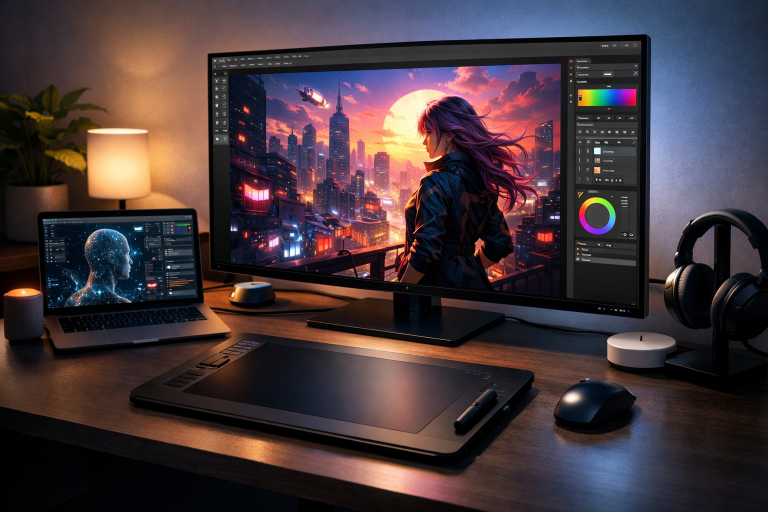
Hardware innovation has revolutionized the way digital artists work. Devices such as the XPPen Artist Ultra 16, with its vivid 4K OLED screen and responsive touch controls, deliver unparalleled visual clarity and a lifelike drawing experience. Tools like Xencelabs’ Pen Display 24+, which includes Calman Ready color calibration, ensure professionals can rely on accurate color output, which is vital for publishing and commercial projects.
Besides improved screens and calibration technology, drawing tablets are embracing ergonomic designs that support prolonged creative sessions. Pressure sensitivity, tilt recognition, and lightweight construction are becoming standard features. As artists seek more comfort and control, the industry is quickly adapting to meet these essential needs. Larger displays and wireless connectivity options are also enabling greater flexibility and adaptability, making it easier for creatives to work in various settings.
AI Integration in Creative Tools
Artificial intelligence is increasingly shaping how artists create and interact with their tools. Applications from industry giants such as Adobe Firefly and Project Graph offer smart content generation, auto-coloring, background removal, and other automated processes that save countless hours. AI does not just speed up repetitive tasks; it can also help stimulate creativity by offering suggestions and generating new ideas based on user input. According to a recent study on AI in art and illustration, these technologies are rapidly becoming collaborative creative partners rather than mere utilities.
As AI-powered tools learn from vast datasets, their ability to interpret natural language prompts and adapt to individual styles is improving. This enables unique partnerships between human creativity and digital assistance, letting artists focus more on the expressive side of their work while reducing technical friction.
Software Innovations Enhancing Creativity
Software tools are evolving just as rapidly as hardware. Modern platforms like Figma incorporate AI-powered features for creating web designs, app prototypes, and marketing assets, allowing seamless shifts from ideation to final output. Notably, the digital art space is now filled with robust alternatives to legacy software: Affinity Designer, Procreate, and Clip Studio Paint have emerged as favorites for their affordability and power.
Even traditional heavyweights like Adobe Creative Cloud are introducing enhanced collaboration features and cloud integration, which enable creatives to work together from anywhere. Flexible pricing models and mobile compatibility make it easier for individuals and schools to adopt industry-standard solutions, broadening the pool of creative talent worldwide. Consumer adoption and professional innovation are moving in tandem, fostering a rich environment for inspiration and advancement.
Accessibility and Affordability
Perhaps the most transformative trend is the democratization of digital drawing tools. Affordable options like the iPad Air, paired with intuitive apps, bring professional-grade capabilities to hobbyists and students alike. New pricing structures for software, including one-time purchases and free-trial models, invite more people to experiment with digital art, regardless of skill level or income.
This broadened access has created an environment where different creative voices can be heard, making the digital art community more inclusive and innovative. Organizations focused on arts education and digital literacy are driving further change, encouraging young creatives to build foundational skills and propel their artistic journeys in new directions.
Impact on Creative Workflows
The convergence of advanced hardware and intelligent software is making the creative process faster, smoother, and more enjoyable. Artists can accomplish sophisticated tasks such as photo manipulation, animation, and illustration within unified platforms, enhancing efficiency and allowing for more spontaneous creativity. Real-time feedback and AI-powered guidance are refining every step, reducing revision cycles and streamlining project timelines.
This enhanced workflow not only frees up time for experimentation but also encourages collaboration across disciplines, empowering designers, illustrators, and animators to build more complex and innovative creative projects. As digital drawing tools become more intuitive, artists can devote more energy to original thinking and expressive output.
Future Trends and Predictions
The trajectory of digital drawing tools points toward even greater personalization, flexibility, and intelligence. Advanced AI will offer context-aware tools that anticipate user needs, making complex creative tasks more accessible. Continued price reductions and hardware miniaturization will further expand the creative audience.
With developments such as gesture controls, haptic feedback, and immersive mixed reality environments on the horizon, tomorrow’s creative tools will be more engaging and responsive. According to The Verge’s analysis of drawing tablets for creators, both the hardware and software landscapes are poised for fresh breakthroughs that will redefine the artistic experience in the years ahead.
Conclusion
Ongoing advancements in digital drawing tools are solidifying their place at the center of modern creative workflows. As AI, cutting-edge hardware, and affordable software continue to evolve, a new era is dawning for artists and designers. With greater accessibility, intuitiveness, and creative power at their fingertips, today’s creatives can look forward to a future where their imaginations set the only boundaries.
Leave a Reply